
Why Do Certain Bath Tools Breed Bacteria?

Your bath tool might look perfectly clean after a shower, but looks can be deceiving.
Every time you shower, your bath tool comes into contact with water, body oils, dead skin cells, soap, and body wash. Add a warm, humid bathroom and a tool that stays damp between uses, and you have a pretty comfortable little hangout spot for bacteria and other microorganisms.
And let's be honest, nobody wants their shower tool becoming the place where bacteria decides to move in.
How Can Dirty Bath Tools Affect Your Skin?
For some skin types, what you use in the shower can make a difference.
If you're prone to acne, body breakouts, clogged pores, or irritation, keeping your bath tools clean is one small but worthwhile part of your routine. Using a tool that's overdue for a wash or replacement can introduce extra bacteria and buildup to skin that's already more susceptible to congestion and irritation.
This is especially important when cleaning and exfoliating. While a well-maintained bath tool can help you feel clean and refreshed, using one that is dirty, damp, or worn out can work against what you're trying to achieve.
A fresh, well-cared-for tool is simply a better starting point for your shower routine.
Which Bath Tools Carry the Most Bacteria?
There isn't one bath tool that automatically wins the title of "most bacteria-filled." How much bacteria and buildup a tool collects depends on its material, construction, how well it drains, how quickly it dries, and how often it's cleaned.
Let's take a look at a few of the usual shower suspects.

Natural Loofahs
Natural loofahs are made from the dried, fibrous interior of the luffa plant, creating a rigid, porous structure with lots of small spaces that can hold onto moisture and residue.

Shower Poufs
Shower poufs are made from plastic mesh that is gathered, folded, or layered into a fluffy puff. Depending on how tightly the mesh is constructed, these layers can also trap water, dead skin cells, and product residue if they aren't thoroughly rinsed and dried.

Washcloths
Washcloths are made from absorbent fabric, which makes them great for picking up water, soap, and product residue. The downside? That same absorbency means they can hold onto moisture long after your shower is over. If they're tossed into a damp shower or left in a pile instead of being properly washed and dried, they can become a breeding ground for bacteria and other microorganisms.

Shower Sponges
Shower sponges come in a variety of materials and textures, but their sponge-like construction can make them prone to holding onto water and residue. If the material is dense or has limited airflow, it can take longer to dry completely, giving bacteria more time to multiply between uses.

Natural Sea Sponges
Natural sea sponges are harvested from the ocean and have a naturally porous structure. Those tiny pores can hold water, body oils, dead skin cells, and product residue. While they can feel soft and luxurious against the skin, they need to be thoroughly rinsed and allowed to dry completely between uses to help prevent the buildup.

Body Brushes
Body brushes are typically made with bristles attached to a solid base, which gives them a very different construction from soft, absorbent bath tools. Since the bristles themselves don't absorb water in the same way fabric or sponge materials do, they can dry more easily. However, water, dead skin cells, soap, and body oils can still collect between the bristles, especially when the brush isn't thoroughly rinsed and dried after use.
What Are Great Alternatives?
If you're looking to break up with your current bath tool, you have options. The key is choosing a bath tool that's easy to clean, doesn't hold onto excess moisture, and can dry properly between uses. Most importantly, your bath tool should actually clean your skin. And if it exfoliates too, even better.

Silicone Body Scrubbers

Exfoliating Gloves

Korean Exfoliating Towels
Silicone body scrubbers are one option. Their non-porous surface makes them easy to rinse and clean, without the nooks and crannies found in traditional loofahs. Exfoliating gloves are thin and lightweight, making them relatively easy to rinse and dry, while Korean exfoliating towels have a flat, lightweight construction that doesn't hold as much water as a thick sponge. Both still need to be rinsed, washed regularly, and dried properly.
Then there's LUV SCRUB.

Our African Mesh Body Exfoliator is a bath tool that helps both clean and exfoliate the skin. It is inspired by Ghanaian bathing traditions that use a “Sapo,” also known as an African sponge, African net sponge, African scrub, and more.
Made from 100% nylon mesh, our magical mesh has an open construction that allows water to pass through instead of sitting inside a dense sponge. It's easy to rinse, wring out, and hang up to dry after your shower, and its design allows it to dry quickly between uses.
How Should You Clean and Care for Your Bath Tool?
One of the biggest bath-tool mistakes is using it, tossing it somewhere in the shower, and forgetting about it until the next shower.
Your bath tool needs a little post-shower routine of its own.
Rinse It Thoroughly
After every shower, rinse your bath tool with clean running water. Make sure you wash away leftover body wash, oils, and skin debris instead of simply hanging it up while it's still covered in yesterday's shower leftovers.
Wring Out Excess Water
Don't leave your bath tool dripping wet. Wring out as much excess water as you can before hanging it up. Less water means less time spent sitting damp.
Give It Some Air
Airflow is your friend. Place your bath tool in a well ventilated space. Avoid leaving it bunched up, on the shower floor, or pressed against a wet surface, as trapped moisture can create an environment where mildew and bacteria can thrive. A bath tool that can actually dry between uses is a much happier bath tool.
Keep It Personal
Don't share your bath tool with other people, even family members. Your bath tool comes into direct contact with your body, so it's best treated as a personal hygiene item. Share the snacks, share the LUV, not the scrubber.
Clean It Regularly
Rinsing your bath tool after every shower is important, but it also needs regular cleaning. Follow the manufacturer's care instructions for your specific bath tool. If it develops a persistent odor or visible buildup that doesn't come out with cleaning, it may be time to replace it.
When Should You Replace Your Bath Tool?
Even your favorite bath tool won't last forever.
With regular use, materials can eventually start to wear down. Your bath tool may also become harder to clean, develop an odor, or simply stop feeling as fresh as it once did.
Here are a few signs that it might be time for a replacement:
It's reached the end of its recommended lifespan: Sometimes, it's simply time for a new one.
Visible buildup: If product residue or buildup isn't coming out, it's probably time for a fresh one.
Persistent odor: If it still smells after cleaning, don't ignore it.
Deterioration: Fraying, tearing, thinning, or changes in texture can mean the material is wearing down.
For LUV SCRUB, we recommend replacing it every 18 months. That's part of what makes it such a great addition to your shower routine.
Final Thoughts
Your shower routine doesn't end when you turn off the water.
Warmth and moisture are part of what makes a shower feel so good. But when all of those are left sitting on your bath tool between uses, they can create an environment where bacteria and other microorganisms can thrive. In fact, if you were to cut open a shower pouf that's been used for a while without being properly cared for, you might be surprised by what you find inside, including dark buildup caused by mildew and bacteria.
Whatever bath tool you use, the basics are the same: rinse it well, squeeze out excess water, let it dry properly, and replace it regularly. Many bath tools need to be replaced often, which can add up and become an ongoing expense. But replacing your bath tool when it's worn out or past its recommended lifespan is important for maintaining better hygiene and reducing the risk of skin concerns.
So choose a bath tool that's easy to rinse and dry. Just like LUV SCRUB, it's designed to rinse easily, dry quickly, reach those hard-to-get areas like your back, and give you the cleaning and exfoliation you need to create a smooth canvas. Plus, it's built to last for up to 18 months.
A little care goes a long way, and the right bath tool makes all the difference.
And if you're looking to make African exfoliation part of your routine, an authentic African net sponge like LUV SCRUB gives you a simple way to exfoliate, cleanse, and prep your body for the rest of your body care routine.
Because your bath tool deserves a little LUV, too 🩷
More LUV SCRUB Blogs For You:
Keratosis Pilaris 101: What Causes Those Tiny Bumps and What Helps
Can Women With Melanin-Rich Skin Use Spray Tans and Self-Tanners?
LUVSCRUB is the original mesh body exfoliator. An enhanced version of the authentic African net sponges used for generations. Shop for yours here and say hello to smoother, softer skin. Tell your friends! (You can thank us later).
Keratosis Pilaris 101: What Causes Those Tiny Bumps and What Helps

You know those tiny bumps that seem to have taken up permanent residence on your arms or thighs?
They may look like goosebumps that never got the memo to go away. Maybe they feel rough and bumpy when you run your hand over your skin. Maybe you've even mistaken them for body acne.
If this sounds familiar, you may be dealing with keratosis pilaris, better known as KP or, less glamorously, “chicken skin.” And you're definitely not alone. Dermatologist Dr. Sandra Lee, better known as Dr. Pimple Popper, says KP is one of the skin concerns patients talk to her about most frequently.
So, what actually causes KP? Where does it show up? Does exfoliation help? And what should you actually be doing in the shower?
Let's get into it.
What Is Keratosis Pilaris?
Keratosis pilaris is a common skin condition that causes small, rough bumps to form around hair follicles. They are usually painless, although some people experience dryness or itching. KP is often described as looking like tiny goosebumps.
And here's something important: KP isn't contagious, and it isn't caused by poor hygiene. So if you've been scrubbing your arms wondering what you're doing wrong, take a breath.
What Causes KP?
KP happens when keratin builds up around hair follicles and creates plugs instead of naturally shedding from the skin's surface. Exactly why this happens isn't fully understood, but genetics appear to play a role. KP also tends to be more noticeable when skin is dry.
That's why KP can sometimes seem like it has a seasonal schedule.
Your skin may look smoother during warmer, more humid months, only for those familiar bumps to make a comeback when the air gets dry.
KP can also run in families. So if you and a parent or sibling share the same tiny bumps on your arms, there's a good chance genetics are part of the story.
What Does KP Look Like?

KP can look a little different from person to person, but the classic sign is small, rough bumps centered around hair follicles. The bumps can be skin-colored, white, red, pink, brown, or darker depending on your skin tone.
The skin may feel:
- Rough
- Dry
- Bumpy
- Uneven
The bumps can also be mistaken for acne, especially when they're red or inflamed.
How can you tell KP from body acne?
KP usually feels rough and tends to appear in areas like the upper arms and front of the thighs. Unlike typical pimples, the bumps aren't necessarily filled with pus or associated with the same type of inflammation you see with acne.
Another term you may hear is “strawberry skin.” While the two aren't exactly the same thing, people sometimes use the phrase to describe small dark or red dots around hair follicles, particularly on the legs.
If you're unsure what you're dealing with, a dermatologist can help identify it.
Where Does KP Usually Appear?
Common areas include:
Upper arms: Probably the most recognizable KP zone.
Thighs: Especially the front of the thighs.
Buttocks: Another common location for rough, bumpy skin.
Cheeks: More common in children, although facial KP can occur in adults too.
Lower legs and forearms: Some people develop bumps beyond the usual areas.
Basically, if an area has hair follicles, KP can potentially show up there. It doesn't occur on the palms of the hands or soles of the feet because those areas don't have hair follicles.
How to Manage Keratosis Pilaris
Here's the question everyone really wants answered:
Can you get rid of keratosis pilaris?
KP can often be improved and managed, but there isn't a permanent cure. For many people, the bumps gradually become less noticeable over time. Keeping up with a consistent skin-care routine can help manage the rough texture, dryness, and appearance of bumps.
Does exfoliation help KP?

It can.
Because KP involves a buildup of keratin and dead skin cells around hair follicles, gentle exfoliation can help remove dead skin from the surface and improve the appearance and texture of bumpy skin. Dr. Sandra Lee explains that because KP is caused by excess keratin, “exfoliation is essential.”
But there's a very important word here:
Gentle.
More scrubbing doesn't automatically mean smoother skin. In fact, aggressively scrubbing KP-prone skin can irritate it and make the problem look or feel worse.
Physical vs. Chemical Exfoliation
When it comes to exfoliating KP-prone skin, there are two main approaches: mechanical and chemical exfoliation.
Mechanical exfoliation manually lifts away dead skin cells from the surface of the skin. African exfoliation using a Sapo or an African sponge falls under this category.
Chemical exfoliation works differently, using ingredients that help loosen and remove dead skin cells. Common ingredients used for KP-prone skin include lactic acid, glycolic acid, salicylic acid, urea, and retinoids.
The goal isn't to attack every bump like it personally offended you. Gentle, consistent exfoliation is the name of the game. And if you're also using a chemical exfoliant, pay attention to how your skin responds. Combining exfoliating methods too aggressively can leave skin feeling dry or irritated.
For a deeper look at the difference between physical and chemical exfoliation, check out our Mechanical and Chemical Exfoliation 101 blog.
Don't Forget the Moisturizer

Exfoliation is only part of the equation.
Moisturizing helps keep KP-prone skin hydrated and can make rough, dry bumps less noticeable. Dermatologists commonly recommend moisturizers containing ingredients such as urea or lactic acid, and applying moisturizer shortly after bathing while the skin is still damp.
Smooth skin isn't just about what you remove. It's also about what you put back.
The Ideal KP Shower Routine
A good KP shower routine doesn't need to be a 17-step production. Keep it simple. Dr. Sandra Lee explains, “While there’s no cure for keratosis pilaris, my patients are always relieved to learn there are simple, effective ways to manage it at home. My biggest piece of advice is to stay consistent with a gentle exfoliating and moisturizing routine — it’s the key to keeping skin smooth, comfortable and cared for over time.”
Start with warm water
Skip the scorching-hot shower. Hot water can dry out your skin, and dryness can make KP more noticeable.
Cleanse gently
Use a mild cleanser and avoid aggressively scrubbing your skin just because it feels bumpy.
Exfoliation is key
This is where a body exfoliation tool like LUV SCRUB can fit into your routine. Use gentle pressure and focus on the areas where you experience rough or bumpy skin. The goal is to exfoliate, not sandblast.
Rinse and pat dry
No need to rub your skin dry. A gentle pat-down is enough.
Moisturize while skin is still damp
Apply your body moisturizer shortly after your shower. This helps lock in moisture and supports the skin barrier.
Stay consistent
KP management is a routine, not a one-shower transformation. Give your skin time to respond before deciding whether something is working.
Common Mistakes People Make When Managing KP
• Picking at the bumps
We know. They're tempting. But squeezing, picking, or scratching can irritate the skin and potentially leave marks.
• Scrubbing too hard
If your strategy is “the rougher my shower gets, the smoother my skin will be,” it's time for a reset.
Aggressive scrubbing can irritate KP-prone skin.
• Skipping moisturizer
If you're exfoliating but never moisturizing, your skin may be missing a very important part of the routine.
• Using everything at once
Lactic acid. Salicylic acid. Retinol. New lotion. New body wash. Different scrubs.
Your skin: Please.
Start with a manageable routine and introduce new products thoughtfully.
• Expecting overnight results
KP is stubborn. Give your routine time.
Recommended Products for KP-Prone Skin
Your ideal routine depends on your skin, how sensitive it is, and what you're trying to improve.
When shopping for KP-friendly body care, consider:
A gentle mechanical exfoliator

LUV SCRUB - Mesh Body Exfoliator
This is where LUV SCRUB, the original African Mesh Body Exfoliator, comes in. Inspired by traditional West African bathing ritual, its unique knotted texture helps cleanse and exfoliate the skin, long enough to easily reach hard-to-get areas, including your back. While other options are available, like loofahs, washcloths, and other African net sponges, LUV SCRUB is like no other bath tool. We've heard from customers that they notice an immediate difference in how smooth and soft their skin feels after using our magical mesh.
“I started using the LUVSCRUB 2 months ago and it has changed my skin drastically & forever for the better! I suffer from keratosis pilaris on my arms and legs, and after about 3 weeks of consistent use - both dry brushing and in the shower - my KP completely dissipated!! I am ecstatic to report such positive results, and after seeing the same for my waxing clients, the LUVSCRUB is one of my go-to products to recommend for maintaining healthy, soft, luminous skin! Thank you for creating such an effective, beautiful product!”
A chemical exfoliant

AmLactin - KP Bumps Be Gone Cream with 15% Lactic Acid AHA
Look for ingredients such as lactic acid, glycolic acid, salicylic acid, urea, or a retinoid.
A moisturizing body cleanser

LUV SCRUB - Samina Soap Bar
Your cleanser doesn't have to leave your skin feeling tight or stripped to get the job done. The Samina Collection, which includes the Original Collection and Sea Moss Collection, turns cleansing into a more nourishing part of your shower routine. Both collections are made of high-quality ingredients that create a rich, luxurious lather that cleanse the skin while leaving it feeling soft, moisturized, and refreshed. The Sea Moss Collection takes that moisturizing experience a step further with the addition of sea moss. Sea moss has natural humectant properties that help attract and hold moisture, helping skin feel soft and supple after cleansing. It also contains more than 90 minerals, along with vitamins A, C, and E, which help nourish skin that looks dull, dry, rough, or stressed.
A good moisturizer

SLMD - Glycolic Acid Body Lotion
Especially one formulated with ingredients such as urea or lactic acid if those work well for your skin. The key isn't collecting every KP product on the internet. It's finding a routine you can actually stick with.
How Long Does It Take to See Results?
There isn't a universal timeline for improving KP. Some people notice changes in texture relatively quickly, while others need several weeks or longer.
The important part is consistency.
The American Academy of Dermatology (AAD) notes that clearing takes time. If you don't see improvement after following your treatment plan for 4 to 6 weeks, talk with your dermatologist. Because KP cannot be permanently cured, some people also need an ongoing maintenance routine to keep the bumps under control.
So don't judge your entire routine after three showers.
Skin takes time. KP especially likes to take its sweet time.
Final Thoughts
Keratosis pilaris may be common, but that doesn't mean you have to love the texture it leaves behind.
The best approach is less about declaring war on every tiny bump and more about creating a consistent body-care routine that supports smoother, healthier-feeling skin. That's where a good shower ritual can make all the difference. LUV SCRUB is an award-winning African Mesh Body Exfoliator with proven results you can trust, making physical exfoliation an easy part of your routine.
Pair it with a Samina Bar, and you've got the perfect shower duo. LUV SCRUB helps cleanse and exfoliate, while Samina creates a rich, moisturizing lather that leaves skin feeling soft and refreshed. Whether you choose the Original Samina Collection or the Sea Moss Collection, together they turn an everyday shower into a simple ritual for cleansing, exfoliating, and caring for your skin.
Most importantly, don't let the phrase “chicken skin” convince you that your skin is something that needs fixing. KP is common, your skin is normal, and you don't need to wage war on every little bump.
Give your skin some patience, keep your routine consistent, and LUV your skin through every step of the journey.
Keratosis pilaris may be common, but that doesn't mean you have to love the texture it leaves behind.
The best approach is less about declaring war on every tiny bump and more about creating a consistent body-care routine that supports smoother, healthier-feeling skin. That's where a good shower ritual can make all the difference. LUV SCRUB is an award-winning African Mesh Body Exfoliator with proven results you can trust, making physical exfoliation an easy part of your routine.
Pair it with a Samina Bar, and you've got the perfect shower duo. LUV SCRUB helps cleanse and exfoliate, while Samina creates a rich, moisturizing lather that leaves skin feeling soft and refreshed. Whether you choose the Original Samina Collection or the Sea Moss Collection, together they turn an everyday shower into a simple ritual for cleansing, exfoliating, and caring for your skin.
Most importantly, don't let the phrase “chicken skin” convince you that your skin is something that needs fixing. KP is common, your skin is normal, and you don't need to wage war on every little bump.
Give your skin some patience, keep your routine consistent, and LUV your skin through every step of the journey.
More LUV SCRUB Blogs For You:
LUVSCRUB is the original mesh body exfoliator. An enhanced version of the authentic African net sponges used for generations. Shop for yours here and say hello to smoother, softer skin. Tell your friends! (You can thank us later).
Can Women With Melanin-Rich Skin Use Spray Tans and Self-Tanners?

Yes, ladies of all hues can use both spray tans and self-tanners. Many people assume these are only for lighter skin tones, but that's no longer the case. More people with dark skin are embracing spray tans and self-tanners to enhance their natural complexion rather than change it. As celebrity tanning artist Maria Michelle'lee told Vogue, "Sunless tanning is not changing our skin tone, it's amplifying it."
Think of it like adding a touch of highlighter. A spray tan or self-tanner can add warmth, create a healthy-looking glow, and help even out the appearance of your complexion.
As interest has grown, beauty magazines, creators, and tanning professionals have also begun talking more openly about tanning for deep skin tones. What was once considered a beauty routine primarily for lighter complexions is now being embraced by women of all skin tones.
Today, there are formulas made for every skin tone, including deeper complexions. Spray tanning first became popular as a safer alternative to sun tanning, while self-tanners made it possible to achieve similar results at home.
Because a little extra glow never hurt anybody.
Do Women of Color Need to Tan Their Skin?

Need to? No.
Want to? Yes.
There is no rule that says you need to do a tan. For many women with deeper skin tones, spray tans and self-tanners are simply another way to have fun with their beauty routine.
Beauty rituals have always been about more than just the final result. They’re little moments that make us feel special. Whether it’s a long bath, an everything shower, a skincare routine, a fresh manicure, or adding a little extra glow with a spray tan or self-tanner, these rituals give us permission to slow down, pamper ourselves, and enjoy doing something simply because it makes us feel good. They’re a fun way to express yourself and turn everyday routines into moments of self-care.
Spray Tan vs. Self-Tanner: Which One Is Better?
The truth is, neither is better. They simply fit different lifestyles, preferences, and routines. Think of it like choosing between a professional blowout and styling your hair at home. Both can get the job done, but the experience and level of control are different.
Both spray tans and self-tanners are designed to give your skin a temporary sun-kissed glow without the need to spend hours soaking up the sun. The real question is: do you want someone else to do the work, or do you want to be the artist behind your own glow?
Spray Tan
A professional spray tan is like calling in a glow expert. It’s applied by a trained technician or in a spray booth, making it a great option if you want an even, flawless finish without the guesswork. Your technician can help customize the color, coverage, and intensity to match your desired glow, which is especially helpful if you’re new to spray tanning.
If you want to know more about spray tanning? Check out our blog, "The Secret To A Flawless Spray Tan," where we share expert insights from one of our partners, including tips on preparing your skin, what to expect during your appointment, and how to keep your glow looking fresh.
Self-Tanner
Self-tanners let you achieve a similar glow from the comfort of your own home. They come in a variety of formulas, including mousses, lotions, drops, and sprays, so you can find one that fits your routine (and your level of patience).
The best part? You’re in control. Want a subtle “I drink enough water and get eight hours of sleep” glow? Done. Want a little more warmth? You can build it up. Self-tanners allow you to customize your color, apply at your own pace, and refresh whenever your glow needs a little pick-me-up.
At the end of the day, there’s no wrong choice. The goal is the same, feeling confident and comfortable in your skin.
Why Use Spray Tans or Self-Tanners?
For a Healthy Glow
Your skin already has depth and dimension. A spray tan or self-tanner can simply add a little extra warmth and make your complexion look refreshed. As one spray tan expert told Allure, many women of color choose spray tans because they want "that melanin to pop without the risk of damaging their skin."
That same idea is echoed by Alyson Hogg, founder of Vita Liberata, who told British Vogue that "during winter, deeper-toned skin can sometimes appear ashen and lacklustre, and a touch of self-tan can work wonders, bringing back its natural warmth and glow."
Even Out Your Skin Tone
It's common to have areas like the elbows, knees, ankles, and hands appear slightly lighter or darker than the rest of your body.
A spray tan or self-tanner can help create a more balanced, even-looking finish. As Alyson Hogg, founder of Vita Liberata, explained to Vogue, "Self-tanning can also be used to even out skin tone and hyperpigmentation." She adds that it "creates a base glow that makes the contrasts on skin less noticeable."
Or simply because you felt like it. That's reason enough.
How to Prepare Skin for the Best Results
The good news is that prepping your skin for a spray tan or self-tanner is the same, no matter your skin tone. Whether your complexion is fair, medium, or dark, healthy, well-prepped skin is the key to achieving the most even, natural-looking results.

That's where African exfoliation comes in. For generations, West Africans have used the African sponge, also known as the Sapo, as part of their body care and shower routine to cleanse and exfoliate the skin. LUV SCRUB is an authentic Mesh Body Exfoliator inspired by this traditional bathing ritual.
Before applying a self-tanner or getting a spray tan, use LUV SCRUB to remove dead skin cells and create a smooth, even canvas, helping your tan develop more evenly and last longer.
What not to do after getting a spray tan or a self-tanner:
Avoid showering, swimming, sweating, or exercising until your tan has fully developed.
Avoid applying lotions or oils unless your product or spray tan technician recommends them.
Avoid exfoliating or scrubbing your skin while your tan is developing.
When you're ready for your next tan, LUV SCRUB is just as useful. Gentle exfoliation helps remove leftover self-tanner or spray tan, buff away patchy areas, and reveal fresh, healthy skin underneath. Instead of layering a new tan over old residue, you'll have a fresh canvas that's ready for your next application.
Self-Tanners We Recommend
Finding the right self-tanner is all about choosing a formula that works with your skin tone, your routine, and the type of glow you want. While self-tanning products were once created with lighter complexions in mind, more brands are expanding their shades and formulas to help deeper skin tones achieve a warm, natural-looking finish
Whether you’re looking for a subtle boost of warmth or a deeper bronze glow, these self-tanners are worth exploring.

b.tan - Tanned AF 1 Hour Self Tan Mousse
For an affordable option that delivers a deeper bronze, b.tan’s Tanned AF 1 Hour Self Tan Mousse is a popular choice. The mousse formula is designed for quick development, making it a great option if you want a noticeable glow without waiting all day.

Caribe Tanning Mousse
Caribe is a smaller tanning brand focused on creating products for a variety of complexions. Their Tanning Mousse is designed to build a natural-looking bronze while enhancing your existing skin tone.

Loving Tan 8 HR Deluxe Self-Tanning Mousse
Known for its rich, long-lasting color, Loving Tan’s 8 HR Deluxe Self-Tanning Mousse is a favorite among self-tanning enthusiasts. The formula develops over several hours and creates a deeper bronze that can complement warmer and deeper skin tones.

St. Tropez Self Tan Express Bronzing Mousse
A well-known name in the self-tanning world, St. Tropez’s Self Tan Express Bronzing Mousse allows you to customize your color depending on how long you leave it on. It is a great option for those who want flexibility and a more personalized glow.

Bondi Sands Salon Quality Self Tanning Foam
Inspired by Australian salon tanning, Bondi Sands’ Salon Quality Self-Tanning Foam is known for its smooth application and natural-looking finish. The lightweight foam makes it easy to apply evenly while building the level of color you want.
Final Thoughts
So, can women with deeper skin tones use spray tans and self-tanners?
Absolutely.
As spray tans and self-tanners continue to grow in popularity, more women with deeper complexions are embracing them as another way to celebrate and enhance their natural beauty. Whether it's for something special or simply because you just feel like it, there are no rules when it comes to feeling confident in your own skin.
Beauty should be about choosing what makes you feel your best. If a little extra warmth or a more even-looking complexion gives you that boost of confidence, go for it. Your skin, your choice.
And while this blog is all about the women, let's not forget the men. Spray tans and self-tanners aren't just for the girls. Plenty of men enjoy a healthy-looking glow too. Confidence looks good on everyone.
No matter who you are, remember that beautiful results start with healthy, well-prepped skin. That's why exfoliation is one of the most important steps before applying a spray tan or self-tanner.
LUV SCRUB is an authentic Mesh Body Exfoliator designed to gently remove dead skin cells to help create the smooth, even canvas your tan needs.
Today, you'll find many products marketed as an African net sponge, African net, or African scrub. Before purchasing, take the time to educate yourself on how to identify authentic African exfoliation products so you know you're getting the real thing.
So if you've been wondering whether spray tans or self-tanners are for you, consider this your sign. Own your glow, celebrate your skin, and let LUV SCRUB help you get there.
More LUV SCRUB Blogs For You:
LUVSCRUB is the original mesh body exfoliator. An enhanced version of the authentic African net sponges used for generations. Shop for yours here and say hello to smoother, softer skin. Tell your friends! (You can thank us later).
Laser Hair Removal: Say Goodbye to Razor Drama
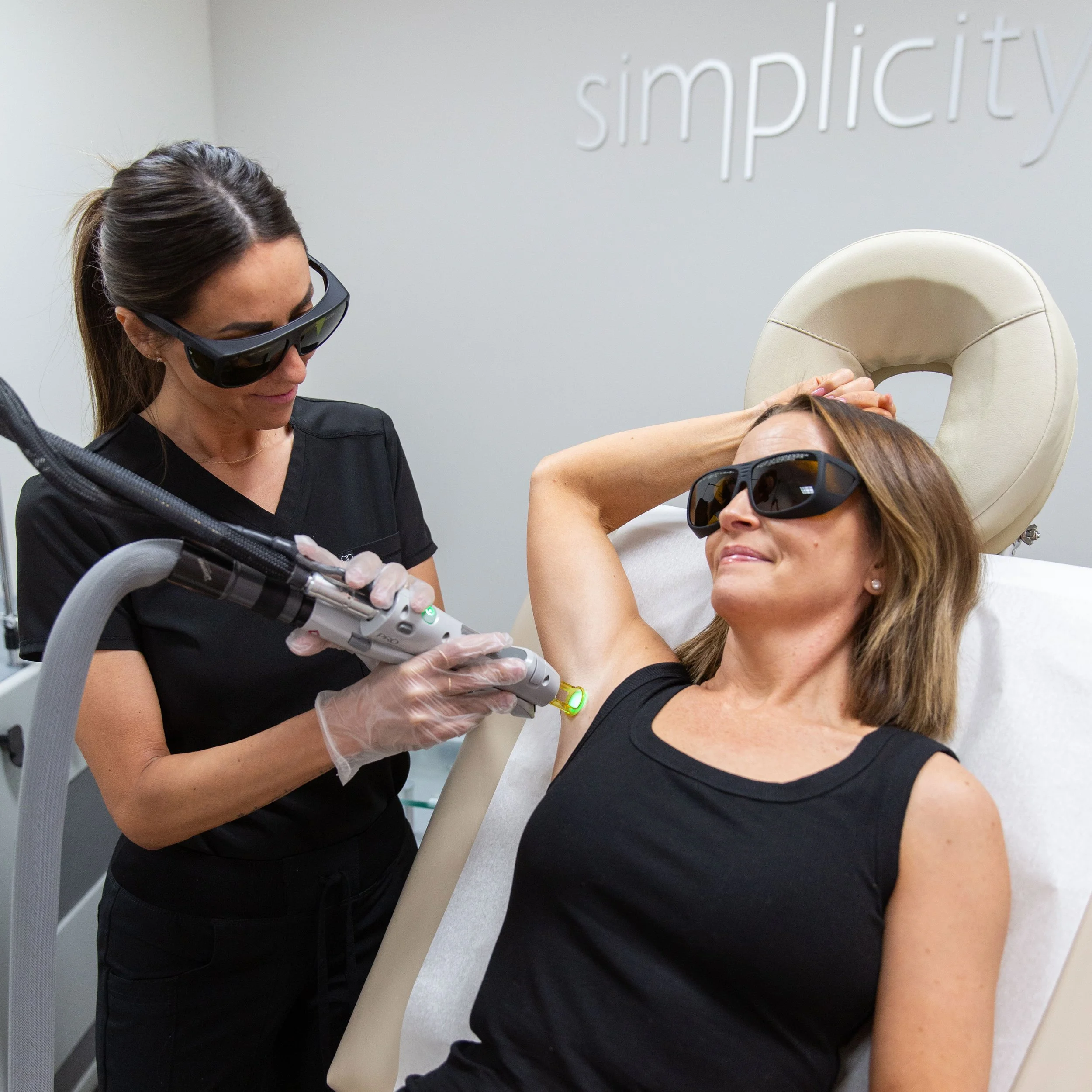
Courtesy of Simplicity Laser
Let’s be honest. Shaving every other day is a full-time job nobody applied for. Waxing is a go-to for many but it still requires regular appointments. Hair removal creams are a gamble. Somewhere along the way, laser hair removal showed up like, “Relax, I got this.”
If you have been curious but not fully convinced, here is your guide to what laser hair removal actually is and why people are lowkey obsessed with it.
So… What Is Laser Hair Removal?
Think of it as a very focused beam of light that tells your hair follicles, “You are done here.”
The laser targets pigment in your hair, heats the follicle, and slows down future growth. It is not magic, but it is science doing its job very efficiently.
The result is less hair, less shaving, and less daily maintenance drama.
How It Actually Works
Hair grows in cycles. The laser only works on hairs that are actively growing. That means:
One session equals some progress
Multiple sessions equal real results
Consistency equals smoother skin over time
Your body does not synchronize hair growth just to make your life easier, so multiple sessions are necessary. A little annoying, but worth it.
The Glow-Up Benefits
Here is why people keep going back:
Less shaving, more living
No more last-minute panic shaving before wearing shorts.
Fewer ingrown hairs
Your skin finally gets to exist without constant irritation.
Long-lasting smoothness
Not “smooth until tomorrow morning” smooth. Real smooth.
A simpler routine
You will suddenly have extra time and not know what to do with it. Rest is a good option.
Does Laser Hair Removal Hurt?
Not exactly a spa day, but also not unbearable.
Most people describe it as a quick snap, like a rubber band tapping the skin. Some areas feel more intense than others, but cooling technology helps a lot.
It is more “slightly annoying” than painful for most people.
After treatment, mild redness or sensitivity can happen, so your skincare routine becomes especially important.
Laser Hair Removal Questions, Answered by an Expert
There is plenty of information about laser hair removal online, but nothing compares to advice from professionals who perform these treatments every day.
We asked the experienced laser technicians at our LUVly retail partner, Simplicity Laser, to share their expert advice on some of the most common questions about laser hair removal, including how to prepare for your first appointment, what to expect during treatment, and how to care for your skin afterward.
What should someone know before getting laser hair removal for the first time?
"Before your first laser hair removal treatment, know that your results depend on more than just the laser. Staying on schedule, avoiding waxing or tweezing between appointments, shaving instead, gently exfoliating as directed, following your aftercare instructions, and protecting your skin from the sun will all help you achieve the best results. Be sure to communicate any changes to your skin, medications, or concerns with your technician so your treatment plan can be tailored to you."
How many sessions does it typically take to see long-term results?
"While everyone responds differently, most people begin to notice a reduction in hair growth after their first few treatments. For long-term results, however, patience and consistency are key. Because laser hair removal only targets hairs that are in their active growth phase, multiple sessions are needed to treat all of the hair over time. At Simplicity Laser, we typically recommend 12 to 16 treatments, spaced about 6 to 8 weeks apart, to achieve optimal long-term hair reduction. Many clients experience 70% to 90% hair reduction after completing their full treatment plan, with results that can last for years."
Are there certain body areas that respond better to laser hair removal than others?
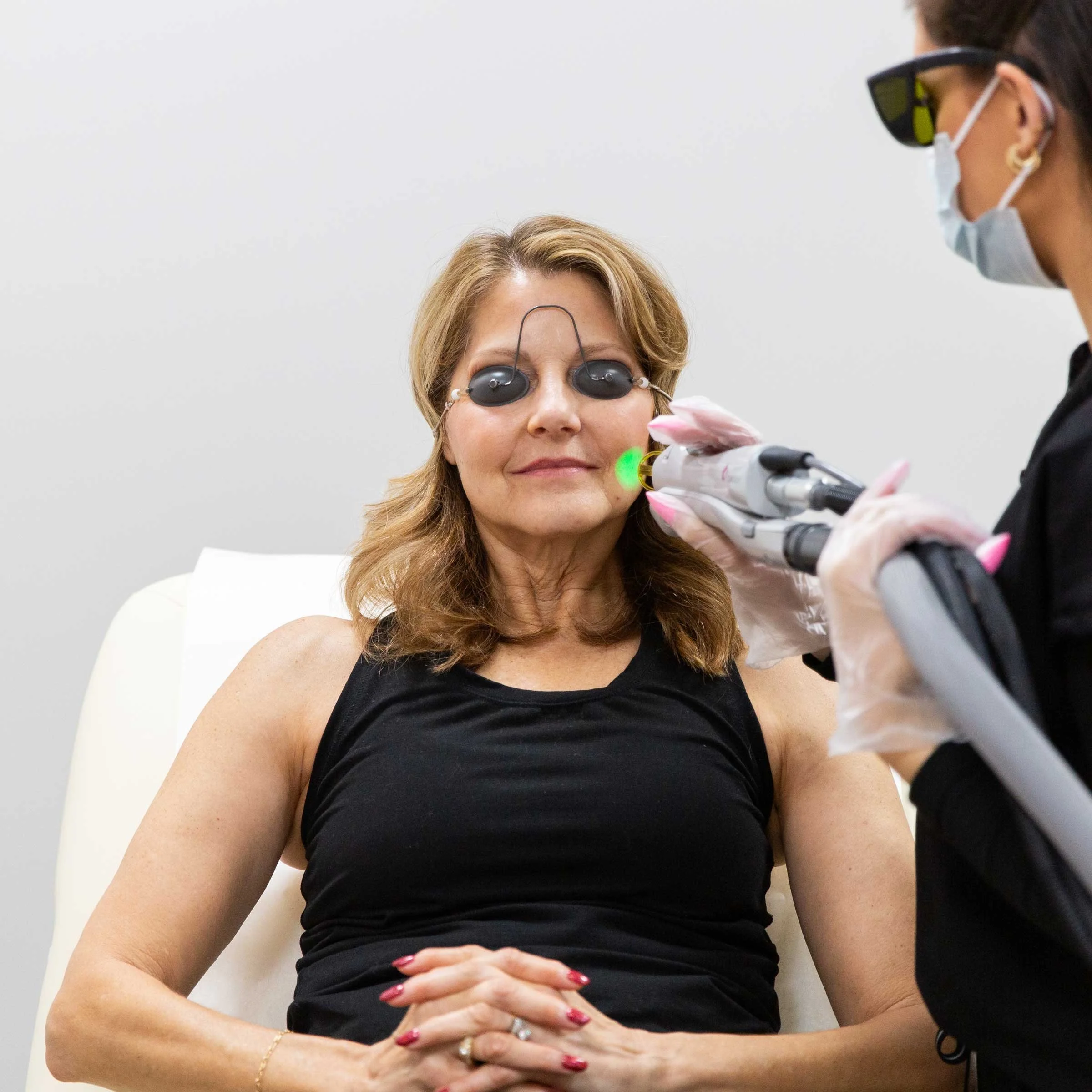
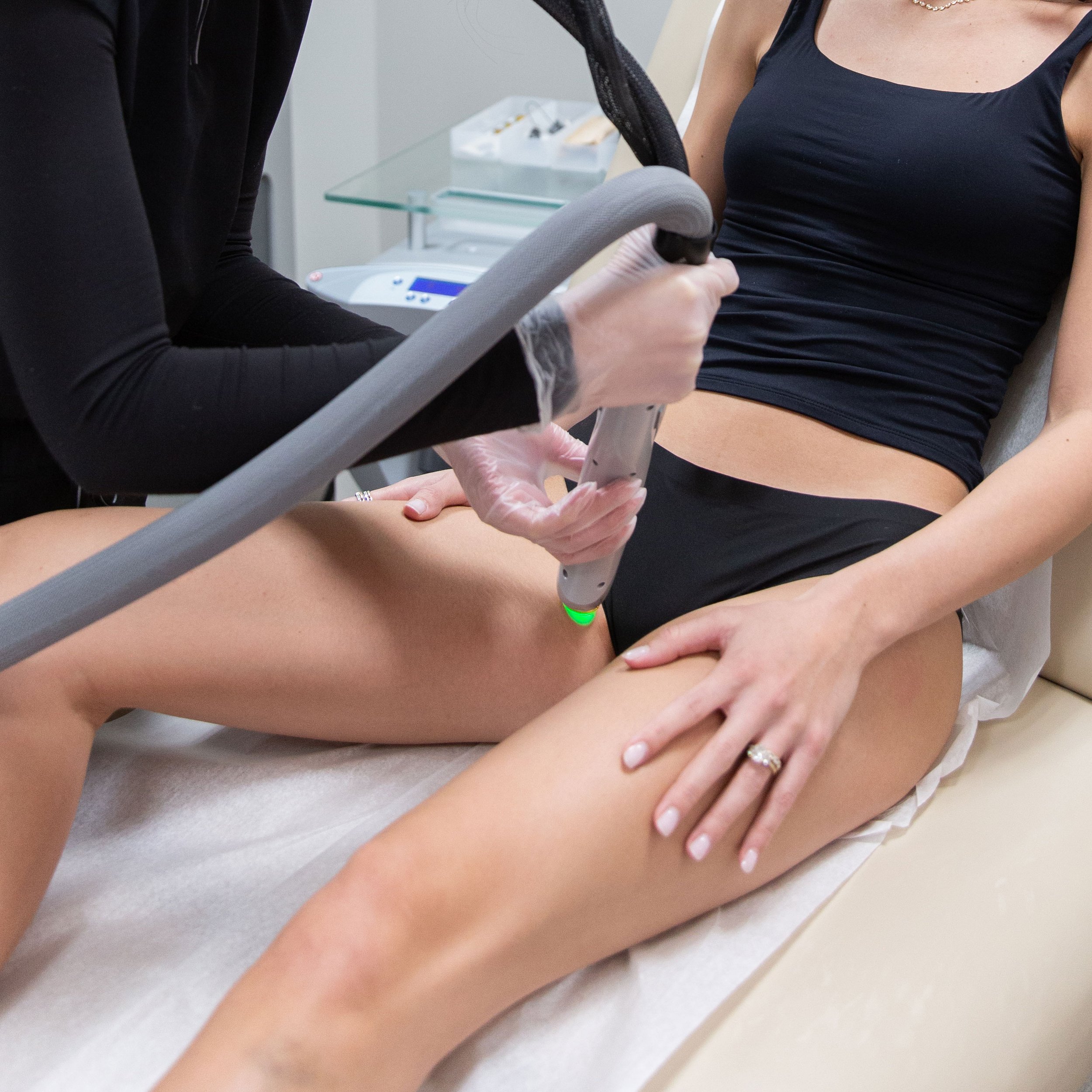
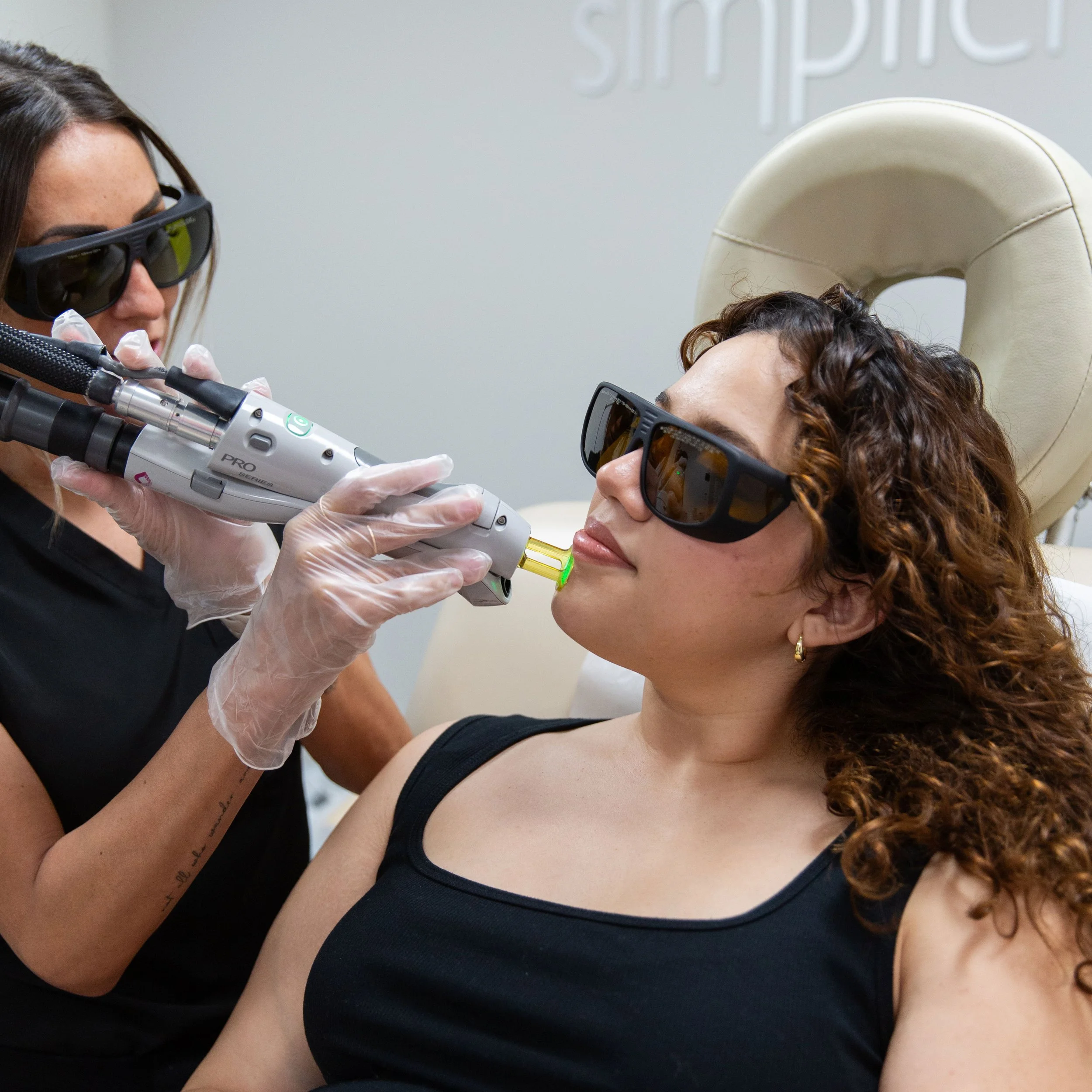
"Yes. Areas with coarse, dark hair, such as the underarms, bikini line, Brazilian, and lower legs, tend to respond the fastest because the laser is most effective when there's a strong contrast between the hair and surrounding skin. Areas with finer or lighter hair, such as the face, arms, or stomach, can still achieve excellent results but may require additional treatments due to hormonal influences and differences in hair growth patterns. Regardless of the treatment area, staying consistent with your treatment schedule is one of the biggest factors in achieving the best long-term results."
What aftercare is needed after a laser hair removal session?
"After a laser hair removal session, the focus should be on protecting and soothing the treated skin. Avoid direct sun exposure, wear a broad-spectrum sunscreen daily, and skip activities that generate excessive heat, like hot tubs, saunas, or intense workouts, for the first few hours after your appointment. Mild redness or sensitivity is normal and typically resolves quickly. Once the skin has fully recovered, gentle exfoliation a few times a week can help treated hairs shed naturally and reduce the likelihood of ingrown hairs."
Why is exfoliation important in the laser hair removal process?
"Exfoliation plays an important role in the laser hair removal process by helping remove dead skin cells and allowing treated hairs to shed more easily. Regular, gentle exfoliation can help reduce the chance of ingrown hairs, keep your skin feeling smooth, and improve the overall appearance of the treated area."
If there's one thing we learned from the experts, it's this: the laser does the heavy lifting, but your skincare routine deserves some credit too. A little consistency between appointments can go a long way toward keeping your skin smooth, happy, and ready for your next session.
Now let's talk about what you can do between appointments to keep your skin looking and feeling its best, one of the most important steps in your body care routine: exfoliation.
Exfoliation Routine During Laser Hair Removal
Once your laser technician gives you the green light to exfoliate again, consistency becomes more important than intensity. The goal isn't to scrub harder. It's to gently support your skin throughout your laser hair removal journey.
This is where African exfoliation comes in. For generations, African bathing traditions have embraced regular exfoliation as an essential part of body care, helping keep the skin clean, smooth, and refreshed. Pairing this ritual with modern laser hair removal is a simple way to care for your skin between treatments.
Start Slowly
After each treatment, allow your skin to fully recover before exfoliating. Once any redness or sensitivity has subsided and your laser technician says it's safe, you can gradually reintroduce exfoliation into your routine.
Choose The Best Exfoliating Tool
The key isn't aggressive scrubbing. It's consistent, gentle exfoliation.
LUV SCRUB Mesh Body Exfoliator is inspired by a traditional African sponge. It has unique knots that cleanse and exfoliate your skin like no other bath tool. Its long, flexible design also makes it easy to reach your back and other hard-to-reach areas that can be difficult to exfoliate with a traditional washcloth or loofah.
Make It Part of Your Shower Routine
Rather than waiting until your next appointment, make exfoliation part of your daily shower routine. An African scrub is gentle enough to use every day, helping keep your skin feeling smooth, refreshed, and ready for your next laser hair removal session.
Pair Exfoliation with Hydration
Healthy-looking skin isn't just about exfoliating. After your skin has healed, follow exfoliation with your favorite body oil or body butter to help support your skin barrier and keep your skin feeling soft and hydrated throughout your laser hair removal journey.
Like laser hair removal itself, great skin isn't achieved in a single session. A consistent skincare routine will help you maintain a smooth canvas from one appointment to the next.
Where People Usually Get It Done
Laser hair removal is not picky. It shows up wherever you are tired of dealing with hair.
Common areas include:
Underarms
Legs
Bikini line
Face like upper lip, chin, and sideburns
Arms, back, chest, and other “I am done with this” zones
Who Is It Best For?
Laser hair removal works best when there is contrast between hair and skin tone, typically darker hair and lighter skin. That said, modern technology has improved a lot and can now safely treat a wider range of skin tones.
A consultation is still important so your provider can customize the approach for you.
Final Thoughts
If shaving feels like a subscription you never agreed to, laser hair removal is basically the unsubscribe button. It is not instant. It is not magic. But it is one of the closest things to low-maintenance smooth skin you can get.
Pairing laser hair removal with proper skincare and African exfoliation using LUV SCRUB can help maintain that soft, smooth, healthy-looking skin for longer.
And once you start, you will probably start looking at your razor like it is on its final warning.
A special thank you to our LUVly retailer, Simplicity Laser, for sharing their expertise for this article. If you're considering laser hair removal, check them out and see why so many people trust their experienced team. With locations across Utah, Arizona, Idaho, Nevada, and Texas, you're never too far from smoother skin.
More LUV SCRUB Blogs For You:
LUVSCRUB is the original mesh body exfoliator. An enhanced version of the authentic African net sponges used for generations. Shop for yours here and say hello to smoother, softer skin. Tell your friends! (You can thank us later).